If your child is obsessed with squishies right now, you are definitely not alone. NeeDoh cubes, dumplings, animals, food-shaped squishies, and other squeeze toys have become one of the biggest toy crazes of 2026.
Are Squishy Toys Safe?
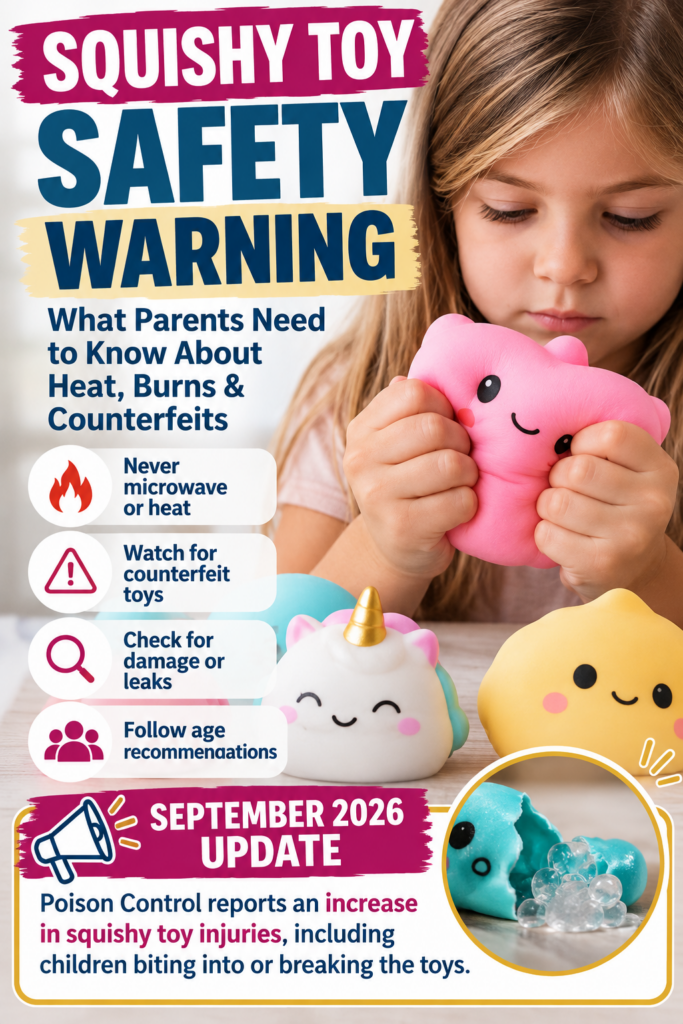
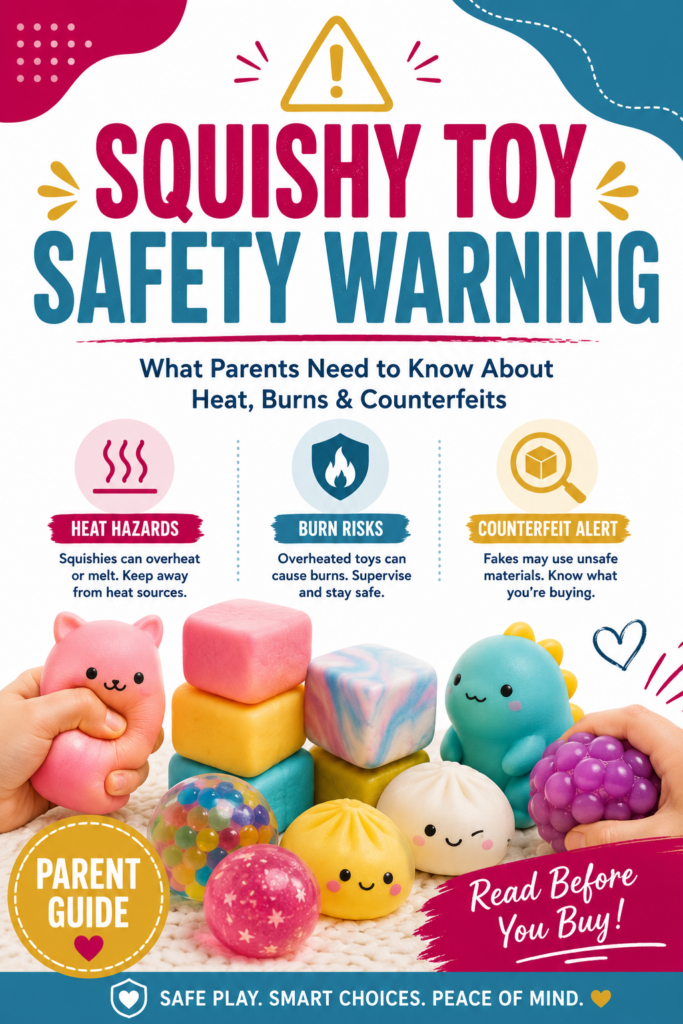
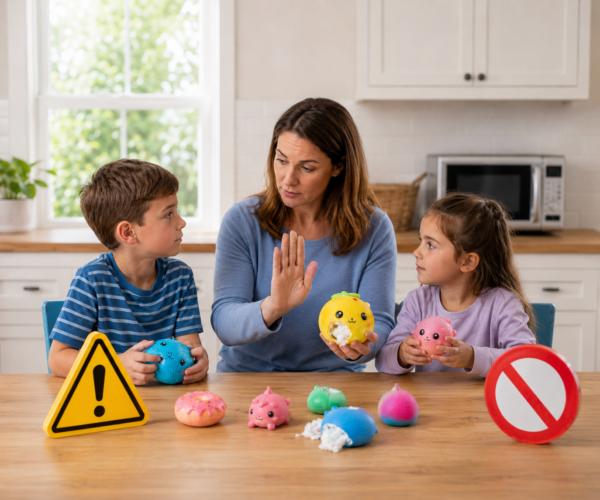
Most parents do not need to throw away every squishy toy their child owns. The CPSC warning focuses primarily on counterfeit or noncompliant products, damaged toys, unknown filling materials, and squishies that have been heated. Buy from reputable sellers, check the manufacturer and age recommendations, inspect toys regularly for damage, and never microwave or intentionally heat a squishy.
They’re cute, collectible, screen-free, and incredibly satisfying to squeeze. My daughter loves them, too, so I completely understand why kids want to collect every new shape and color they see. I’ve waited in some pretty long lines on weekends to get one of the popular NeeDoh cubes and glittery dumplings so I know firsthand how big this trend has become. But there is an important new squishy toy safety warning parents need to know about.
On August 5, 2026, the U.S. Consumer Product Safety Commission (CPSC) warned families about fake and counterfeit squishy toys that may not meet federal toy safety requirements. The agency also repeated an important warning about a dangerous social media trend involving children and teens heating or microwaving squishy toys.
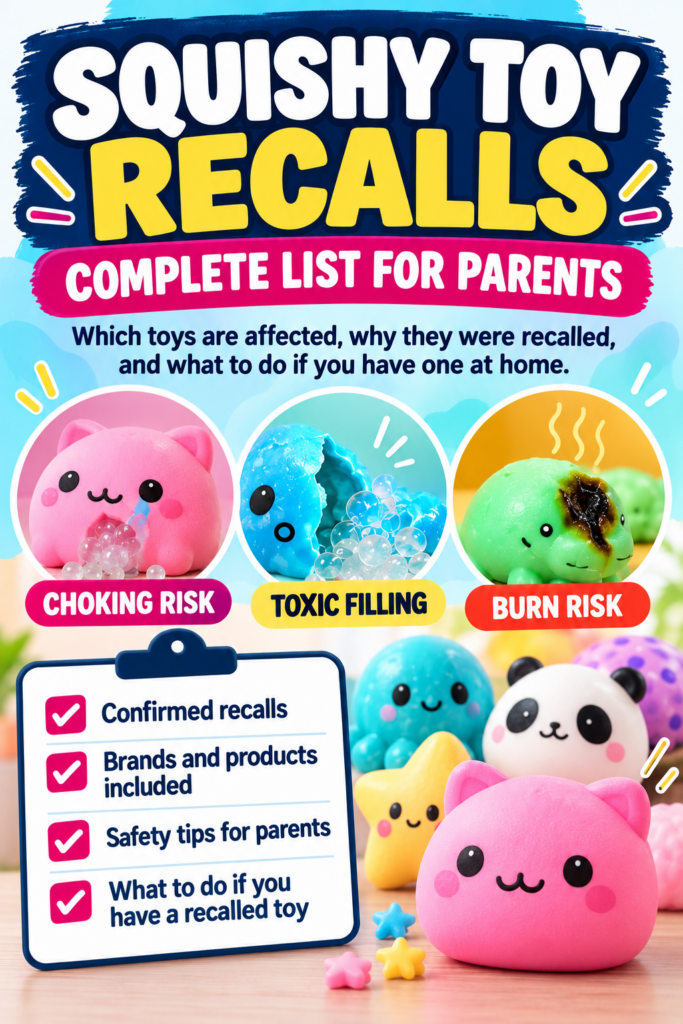
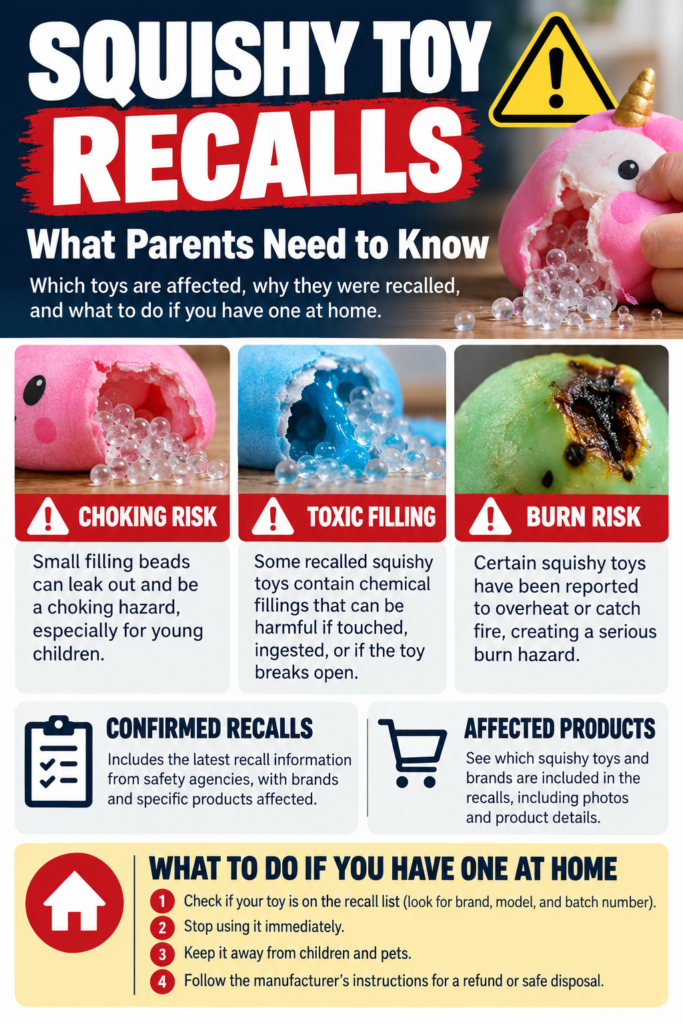
Before you throw away your child’s entire squishy collection, though, there’s some important context. I know reading the report is scary and raises a lot of concerns but it is important to understand some squishies out there are the problem. This is not a recall of all squishies in the market. The biggest concerns involve counterfeit or poorly made products, damaged toys, and exposing squishies to heat. Here’s what parents should know.
Why Is There a New Squishy Toy Safety Warning?
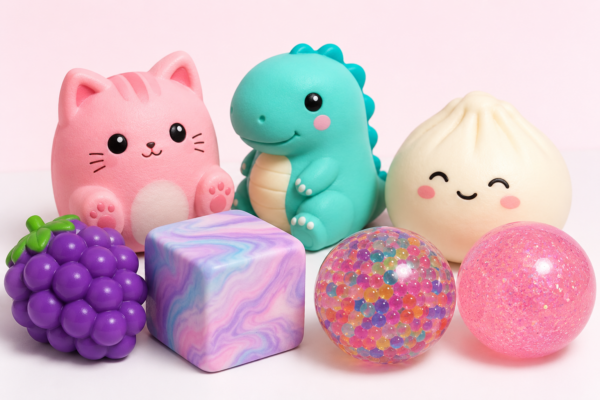
Squishies come in many different designs and are made by many different manufacturers. They can also contain very different filling materials. According to the CPSC, some squishy toys may contain water beads, gels, liquids, powders, or sand. If a toy tears or bursts, children can potentially come into contact with whatever is inside.
The agency is especially concerned about counterfeit and noncompliant toys that may be sold through online marketplaces, social media sellers, discount stores, and other retailers. The CPSC says some counterfeit squishies may fail federal requirements involving things such as small parts, lead, phthalates, water beads, safety labeling, and product testing. This isn’t a tiny problem, either.
As of the August 2026 warning, the CPSC reported identifying 55 shipments containing noncompliant squishy toys and preventing 355,683 units from entering the United States. That is why where you buy these toys—and who actually made them—matters.
There are several things you should not do with these toys as well. My daughter showed me there are many youtube and Tiktok videos out there showing people making dangerous experiments with squishies. Obviously some of them turned out to be dangerous and potentially harmful. This article shows you what not to do with squishies and how to buy the ones that are safe.
Update: Squishy Toy Injuries Are Still Being Reported
The safety concerns haven’t disappeared since the original CPSC warning. In September 2026, the Iowa Poison Control Center reported an increase in exposure cases involving squishy sensory toys and stress balls, with many incidents involving children biting into or breaking the toys and coming into contact with the filling.
That makes it especially important to inspect squishies regularly and throw them away as soon as they begin leaking, tearing, or deteriorating.
What Should I Do If My Child Breaks Open a Squishy?
If a squishy tears or bursts, take it away from your child and keep them from playing with or swallowing the filling. Don’t assume the contents are safe simply because the package describes the toy as “non-toxic.”
If the filling gets on your child’s skin, wash the area thoroughly. If it gets into the eyes, rinse them with running water. If your child swallows any of the filling, develops symptoms, or you are unsure what was inside the toy, contact your local Poison Control Center for guidance.
A damaged squishy should be thrown away rather than repaired and returned to your child.
If the squishy was heated and the filling caused a burn, cool the area under cool running water and seek medical attention for significant burns, burns involving the face or eyes, or burns in a young child.
Can You Microwave a NeeDoh or Other Squishy?
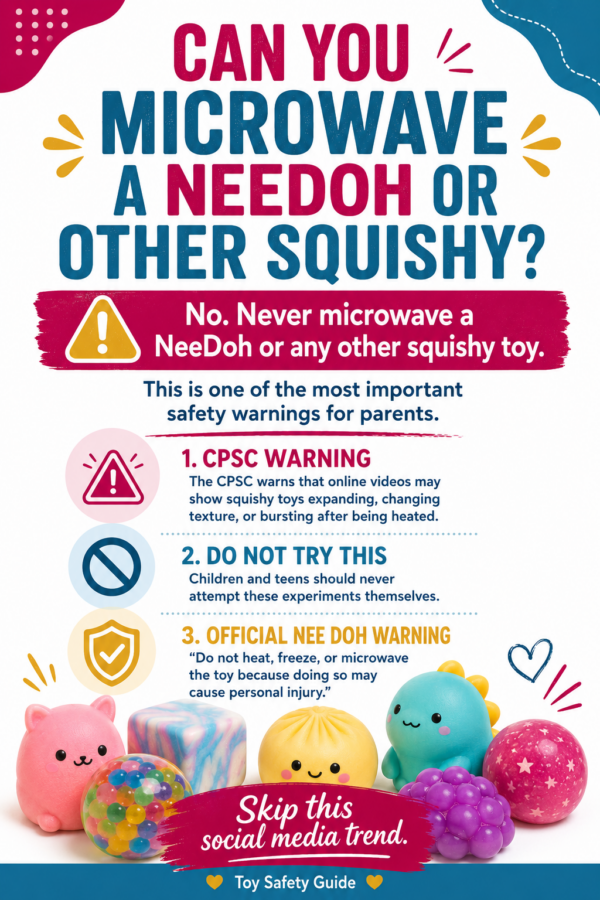
No. Never microwave a NeeDoh or any other squishy toy. This is probably the single most important thing I want parents to take away from this article.
The CPSC specifically warns parents that videos circulating online may show squishy toys expanding, changing texture, or bursting after being heated. Children and teens should never attempt these experiments themselves.
Schylling, the company that makes authentic NeeDoh products, gives the same warning. For example, the official NeeDoh Nice Cube product information says: Do not heat, freeze, or microwave the toy because doing so may cause personal injury.
So even if your child sees a fun-looking TikTok, YouTube Short, or other social media video showing someone heating a squishy, this is one trend they should absolutely skip.
Why Can Heating a Squishy Be Dangerous?
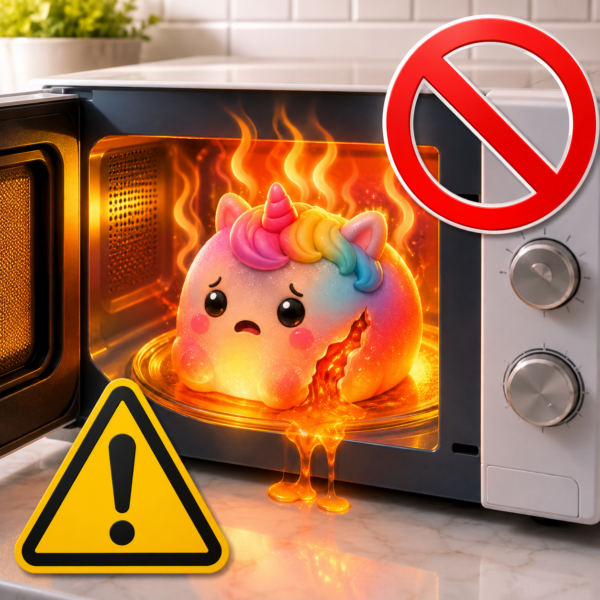
Squishies aren’t designed to be heated. According to the CPSC, excessive heat can make a squishy extremely hot and may cause the outer covering to burst. Hot filling material can then come into contact with the skin and cause serious burns. One particularly concerning issue is that some filling materials can be sticky. If hot material sticks to the skin, it may continue transferring heat instead of simply falling away. And microwaves aren’t the only concern.
Pediatric burn specialists are warning parents to take this seriously. Johns Hopkins Children’s Center reported that heated squishy filling can cause severe burns, particularly when the hot, sticky material splashes onto the skin, face, or eyes. Experts also warn that a microwave isn’t the only danger—squishies can become extremely hot when left inside a parked car.
Don’t Leave Squishies in a Hot Car
This one surprised me, and it’s especially important for families during the summer. The CPSC warns that squishy toys can become dangerously hot when they’re left:
- Inside a hot car
- In direct sunlight for long periods
- Near a heater
- On another hot surface
So if your kids bring their NeeDohs or other squishies everywhere—and mine certainly understand the obsession—get into the habit of bringing them inside instead of leaving them sitting in the car. This is especially important during hot summer months when the inside of a parked vehicle can become extremely hot.
Does This Mean NeeDoh Toys Are Unsafe?
Not exactly. It is important to distinguish between the general CPSC squishy warning and authentic NeeDoh products. The CPSC’s August 2026 warning focuses heavily on fake, counterfeit, noncompliant, damaged, and improperly heated squishy toys. It does not announce a recall of the entire NeeDoh line.
Schylling describes its authentic NeeDoh Nice Cube as containing a non-toxic, dough-like compound and recommends the product for children ages 3 and older. The company also prominently warns customers not to heat, freeze, or microwave it. Authentic NeeDoh products are clearly labeled with manufacturer information and safety instructions, making them easier for parents to evaluate than an unidentified or counterfeit squishy.

The lesson for parents isn’t necessarily “never buy a squishy.” It’s: Buy authentic toys from reputable sellers, follow the age recommendation, inspect them regularly, and never heat them.
If you want a deeper look at brands, materials, safety considerations, and which products I personally prefer, read my complete guide to safe squishies for kids.
How to Spot a Fake or Counterfeit Squishy
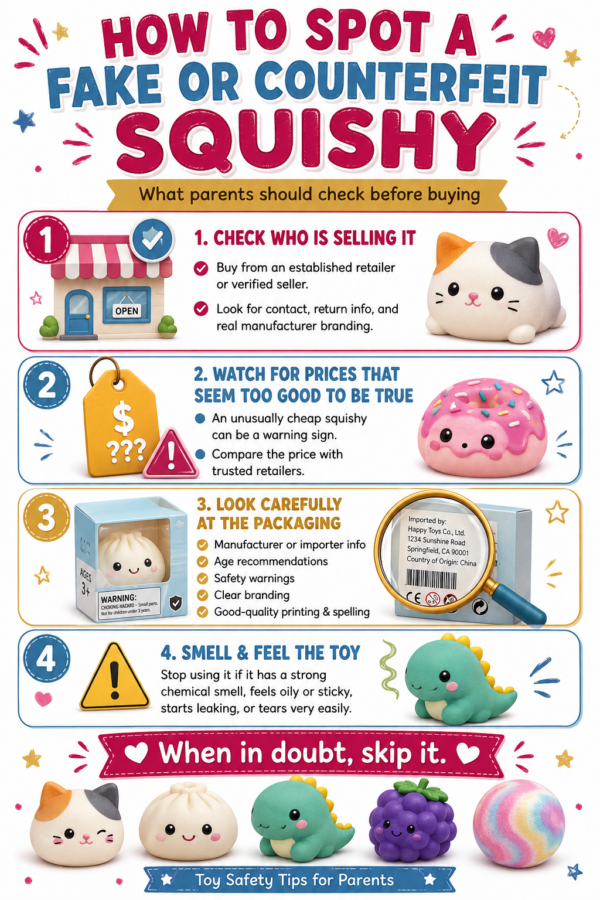
With squishies becoming so popular, counterfeit versions are appearing everywhere. Sometimes it can be difficult to tell the difference, especially when you’re shopping online. The CPSC recommends paying attention to several warning signs.
1. Check Who Is Selling It
Whenever possible, buy from an established retailer or verified seller that clearly provides contact and return information. For popular branded products such as NeeDoh, look for the actual manufacturer and recognizable branding rather than simply buying the least expensive look-alike.
2. Be Suspicious of Prices That Seem Too Good to Be True
We all love finding a bargain, but an unusually cheap version of an extremely popular toy can sometimes be a warning sign.
The CPSC specifically advises consumers to be cautious when a product costs substantially less than it does at established retailers.
3. Look Carefully at the Packaging
Check for:
- Manufacturer or importer information
- Age recommendations
- Safety warnings
- Clear branding
- Good-quality printing and spelling
Packaging filled with spelling mistakes or missing basic manufacturer information should make you think twice.
4. Smell and Feel the Toy
The CPSC recommends stopping use of a squishy if it has a strong chemical smell, feels unusually oily or sticky, starts leaking, or can be torn apart very easily.
Those are signs I would not ignore.
Inspect Your Child’s Squishies Regularly
Even a good-quality toy doesn’t last forever. Squishies get squeezed, stretched, dropped, thrown into backpacks, stepped on, and generally put through everything kids can possibly do to them.
Take a quick look at your child’s collection occasionally. Stop using a squishy if you notice that it is:
- Torn
- Punctured
- Leaking
- Becoming unusually sticky
- Discolored
- Breaking apart
- Starting to deteriorate
The CPSC advises keeping damaged squishies away from children and not allowing kids to touch, swallow, or play with filling material that has escaped from the toy. This is particularly important with younger children who may be tempted to put toys or their contents in their mouths.
Moisture and damage can create problems with other children’s toys, too. If you have younger children at home, you may also want to read what parents should know about the Sophie the Giraffe mold concern and how to properly care for toys that can trap moisture inside.
Are All Squishies Filled With the Same Thing?
No—and this is another reason parents should pay attention to brands and packaging. The word “squishy” describes an entire category of toys rather than one specific product.
Different products can contain very different materials. The CPSC notes that some may contain water beads, gels, liquids, powders, or sand. That does not mean every squishy—or every NeeDoh—contains those materials.
For example, Schylling describes the filling inside its Nice Cube as a non-toxic, dough-like compound. This is why I prefer buying recognizable brands rather than mystery toys from sellers that don’t clearly identify the manufacturer or contents.
What Should Parents Do If a Squishy Breaks?
If a squishy simply develops a tear or starts leaking, I wouldn’t try to repair it and give it back to a child. Take it away, keep children from playing with the exposed filling, clean the area carefully, and follow any disposal instructions provided by the manufacturer. If the toy was heated and burst, use additional caution and avoid directly touching hot filling material.
If your child suffers a burn, especially a significant burn or one involving a younger child, seek appropriate medical care. The CPSC provides specific first-aid guidance for burns caused by heated squishy material and recommends medical attention for serious injuries.
My Simple Squishy Safety Rules for Parents
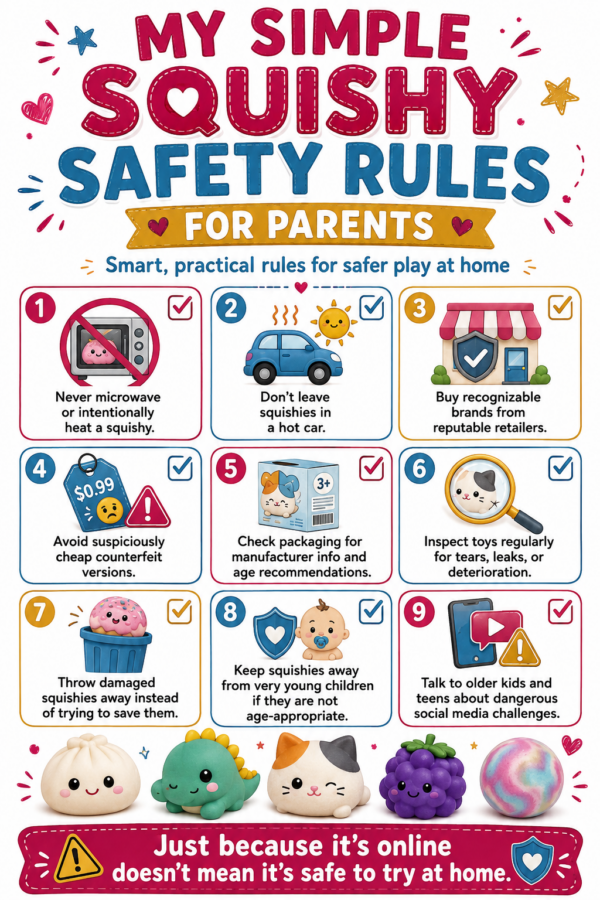
I don’t think parents need to panic about the squishy craze. But I do think we need to be smart about it. These are the rules I would follow in my own home:
- Never microwave or intentionally heat a squishy.
- Don’t leave squishies inside a hot car.
- Buy recognizable brands from reputable retailers whenever possible.
- Avoid suspiciously cheap counterfeit versions.
- Check packaging for manufacturer information and age recommendations.
- Regularly inspect toys for tears, leaks, or deterioration.
- Throw damaged squishies away rather than trying to save them.
- Keep squishies away from very young children when the product isn’t appropriate for their age.
- Talk to older kids and teens about dangerous social media challenges.
Most importantly, make sure your kids understand that seeing someone do something with a toy online doesn’t mean it’s safe to try at home.
Are Squishies Still Worth Buying?

For my family, yes—with some common-sense precautions. I still understand why kids love them. They are fun to collect, satisfying to squeeze, easy to take along, and one of those rare toy trends that doesn’t involve staring at another screen. Here are 101 most popular squishies kids want most in 2026.
But the enormous popularity of squishies has also created a market for cheap copies and counterfeits. That means parents need to pay a little more attention to what they’re buying and where it’s coming from. The newest CPSC warning doesn’t mean every squishy in your house suddenly needs to go in the trash.
It means we should choose reputable products, inspect them when they start looking worn, and make one rule crystal clear: Squishies are for squeezing—not heating.
For more help choosing reputable brands, check out my complete guide: The Squishy Craze Explained: Are Squishies Safe, Non-Toxic, and Worth the Hype?

Leave a Comment